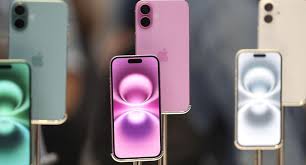
The iPhone 16 lineup, Apple Watch Series 10 and other devices that Apple announced in autumn this year have been banned from sale in Indonesia. This is because Apple has failed to meet local investment commitments of about $15 million.
It is said to have invested 1.48 trillion rupiah ($94 million) out of the 1.71 trillion rupiah ($109 million) committed to invest in local sourcing and/or infrastructure to meet Indonesia’s requirements. Due to Apple not meeting the investment threshold, the Ministry of Industry has not issued the necessary certificates for Apple’s latest products to be sold there. The ban does not affect older Apple devices, which the company can still sell in the country.
Under Indonesia’s local content rules, certain devices sold there must have at least 40 percent “domestic content.” This could be achieved, for example, by using materials sourced in the country, setting up manufacturing plants or employing local workers. Apple has set up four developer academies in Indonesia and earlier this year, it was considering setting up a manufacturing facility there. Samsung and Xiaomi are among the smartphone makers that now have factories in the country.
By not investing the remaining $15 million needed to meet the threshold, Apple may not be able to sell its latest products in Southeast Asia’s largest economy, which could prove to be short-sighted. Although it’s hardly the most popular smartphone brand in Indonesia (Bloomberg notes it’s not in the top six), Apple has room to grow there.
Indonesia is said to have a $1 trillion economy and a young population that is quickly becoming tech-savvy. The government has also reported that there are 350 million active mobile phones in the country, which has a population of 270 million.
According to officials, there are about 9,000 iPhone 16 units in Indonesia. These are mailed into the country or hand-carried by crew and passengers.
Personal use of the phones is allowed, but they cannot be resold, Bloomberg reports. Starting in 2020, any mobile phone bought and brought in from abroad will be taxed and must be registered with the Indonesian government.
It looks like the ultra-thin iPhone we’ve been hearing about for the past few months will get Apple’s “Air” branding. In the Power On newsletter, Bloomberg’s Mark Gurman said the iPhone 17 lineup will feature a new model that could be called the iPhone 17 Air, and it will be about 2 millimeters thinner than any other model seen so far.
It will have a base-level A19 chip and a single-lens camera system, Gurman said, and it will “serve as a testbed for future technologies, including technologies that allow for foldable devices.” According to Gurman, this and the upcoming new iPhone SE will use Apple’s first in-house modem.
We may also see an upgrade to the entry-level iPad that will make it compatible with Apple intelligence. Gurman revealed that the next-generation iPad will get the A17 Pro chip and 8 GB of memory. According to Gurman, this news should come in the spring with the iPhone SE and new iPad Air models.